

Double World Karate Champion Janice Francis-Irwin on why breaks are not failures, and why women should stop apologising for theirs.
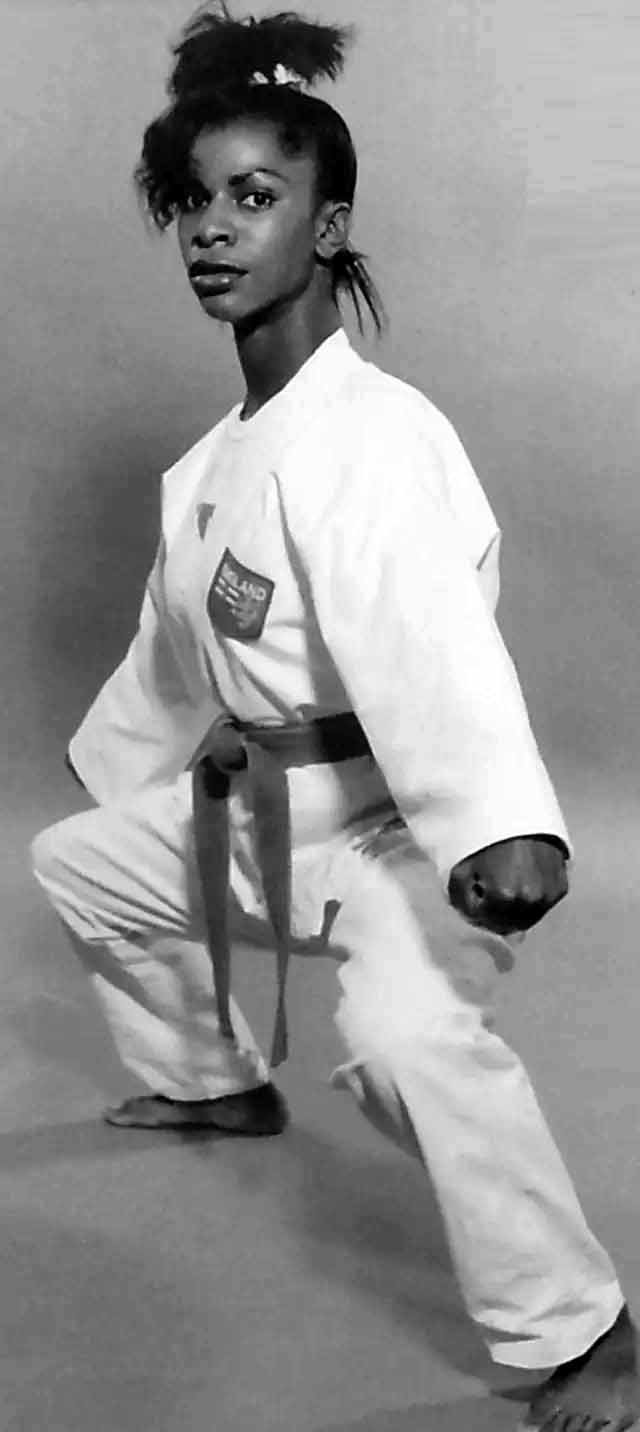
Janice Francis-Irwin was sixteen years old when she first walked into a karate dojo. Not to train, but to watch her brothers and sister. By the time she began training herself at eighteen, she was the last of six siblings to take up the sport. From the outset, she was exceptional.
After just one year, a netball career intervened. Injuries prevented her from attending gradings, and the decision to step away from karate was, in her own words, a difficult one. Life quickly filled the gap: a career as a computer analyst/programmer, high-level netball, a social life and a first home. Adult life arrived at full speed.
Five years passed.
In 1987, Janice returned to karate. Two months later, she entered the English Karate Championships and won a bronze medal. Three years after that, still progressing through her grades and not yet holding a black belt, she was selected for the national squad and brought home her first international gold at the European Championships.
Over the following seven years, whilst working full-time and instructing fitness part-time, Janice went on to win two World titles, four European titles and multiple British and English Championships. She was never a full-time athlete. She was a working woman from Essex, competing at the highest level in the world.
Why It Matters
Francis-Irwin is now in her early sixties and runs JFI Karate Academy across East London and Essex, teaching children, teenagers and adults. She introduces classes specifically for SEND children, as well as ladies-only self-defence sessions.
Many of the women who train with her are returning to fitness after long gaps: after having children, after illness, after years spent prioritising everyone else. Almost all of them apologise. For being unfit. For being slower. For forgetting things they used to know. "Stop apologising," Francis-Irwin tells them. "You have already taken the biggest step. You're here."
She is clear that the fitness narrative handed to women is broken and identifies three consistent mistakes. First: the assumption that cardiovascular exercise alone is sufficient. Women over forty lose muscle mass every decade through a process called sarcopenia, and that loss is not inevitable but requires resistance training, not a brisk walk, to address it. Second: waiting until they feel ready.
In twenty-five years of teaching, Francis-Irwin has never met a woman who felt ready when she came back. Within eight weeks, almost without exception, each one felt different: stronger, fitter, more like herself. Third: separating physical strength from mental health. The dojo, she argues, demands a level of presence and focus that makes it one of the most effective forms of stress relief available.
"The World Health Organisation is clear that physical activity is one of the most powerful interventions available for healthy ageing," Francis-Irwin notes. "Strength does not expire. It waits to be awoken."