

JFI Karate Academy founder Janice Francis-Irwin on what the women's wellness conversation is getting wrong.
Breathing exercises and bubble baths have their place. But according to Janice Francis-Irwin, double World Karate Champion and founder of JFI Karate Academy, neither is sufficient self-care for the kind of chronic, grinding stress that a great many women are carrying today.
Francis-Irwin has been teaching karate for more than twenty-five years. She knows, from the inside, what sustained pressure does to a person. And she is clear on what martial arts does in response.
Francis-Irwin has been teaching karate for more than twenty-five years. She knows, from the inside, what sustained pressure does to a person. And she is clear on what martial arts does in response.
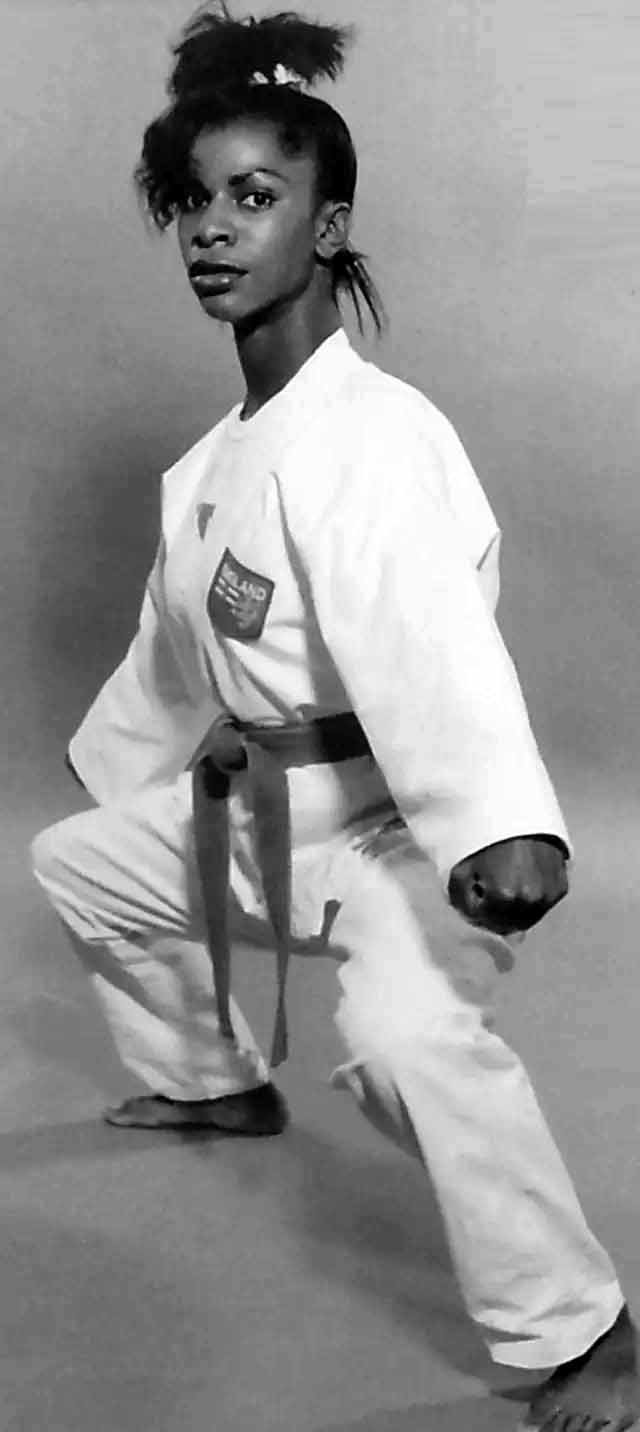
Frances-Irwin in her karate competition days.
What Karate Actually Does for Stress
The research on exercise and stress is well established: physical activity reduces cortisol, improves sleep and lifts mood. But Francis-Irwin argues that what karate offers goes considerably further than general exercise. "Karate demands your complete presence," she explains. "To perform techniques correctly, you cannot be somewhere else in your head. The dojo removes all of that, not because it is relaxing in the conventional sense, but because the physical and mental demands of the practice leave no room for anything else. That total absorption is one of the most effective forms of mental reset I know. And unlike a massage or a meditation app, it also leaves you physically stronger."
Stress, she observes, very often presents as a feeling of powerlessness. Karate is a direct and concrete answer to that feeling. Women who train at JFI regularly describe a shift in how they carry themselves outside the dojo: less vulnerable, more grounded, more capable under pressure.
What the Wellness Conversation Is Missing
Initiatives like Mental Health Awareness Month, which just drew to a close, are important moments to be honest, Frances-Irwin says. In her opinion, the conversation about women's mental health needs to include movement, not just mindfulness.
There is a real reluctance in mainstream wellness culture to direct women towards demanding physical practice, with an underlying assumption that women need to be soothed rather than challenged. "In my experience, they need both," she explains. "But the challenging part is consistently underestimated."
For women in particular, she argues, finding a practice that is communal, builds real skills and is genuinely never boring is a powerful long-term investment in mental health. Karate, in her view, ticks all three. "You do not start with stress. You start with a white belt. And during that belt progression, the stress finds an exit."
JFI Karate Academy runs classes in Ilford and Romford. For further information visit them online.
Media Contact:
Danielle Windecker-Hilton
Sycamore Communications
danielle@sycamorecommunications.co.uk
07704.763269
ENDS